

Handmade Embroidery Church Vestments hold a special place in Christian worship, representing dignity, reverence, and centuries of sacred tradition. Among the many styles available today, handcrafted embroidered vestments continue to stand out for their exceptional beauty and spiritual significance. The artistry involved in creating a Handmade Embroidery Church Vestments reflects a level of dedication and craftsmanship that cannot be replicated through mass production.
From intricate goldwork to carefully stitched religious symbols, handmade embroidery transforms a simple garment into a meaningful expression of faith.
The Heritage of Handmade Embroidery Church Vestments
Hand embroidery has been associated with religious garments for centuries. Throughout history, churches commissioned skilled artisans to create vestments that reflected the importance of worship and sacred ceremonies.
These garments were often decorated with crosses, biblical symbols, floral motifs, and ornate borders. Every stitch was completed by hand, requiring patience, expertise, and a deep understanding of traditional embroidery techniques.
Today, many churches still prefer handcrafted vestments because they preserve this rich heritage while offering unmatched artistic quality.
What Makes Handmade Embroidery Special?
Unlike machine-made decorations, hand embroidery is crafted stitch by stitch. This process allows artisans to create intricate patterns with greater depth, texture, and character.
Some features that distinguish handmade embroidery include:
- Detailed craftsmanship
- Unique artistic expression
- Rich visual texture
- Strong durability
- Traditional appearance
- Custom design possibilities
Because every piece is individually embroidered, each vestment carries its own distinctive beauty and character.
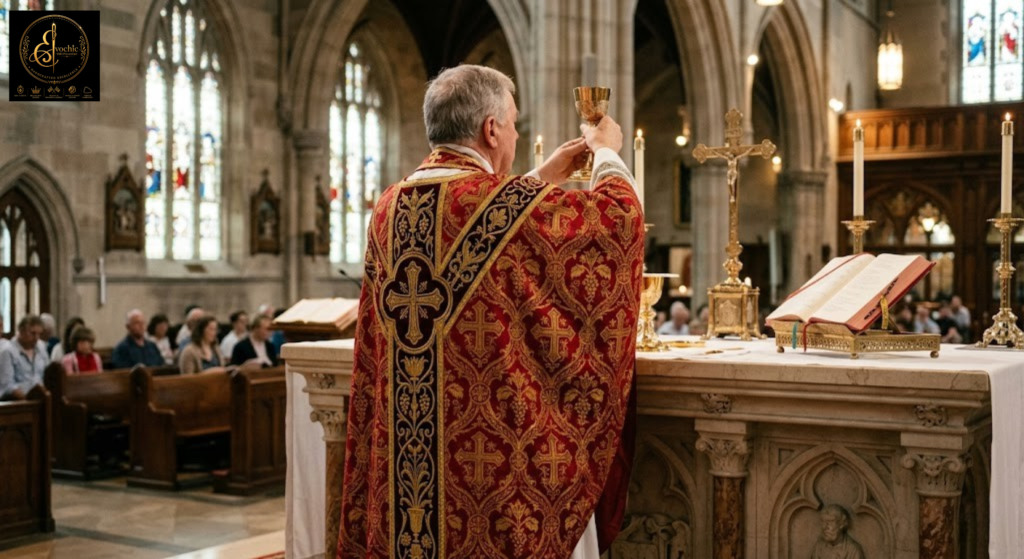
Sacred Symbols Commonly Used in Church Vestments
Religious embroidery often incorporates symbols that hold spiritual significance within Christian traditions.
The Cross
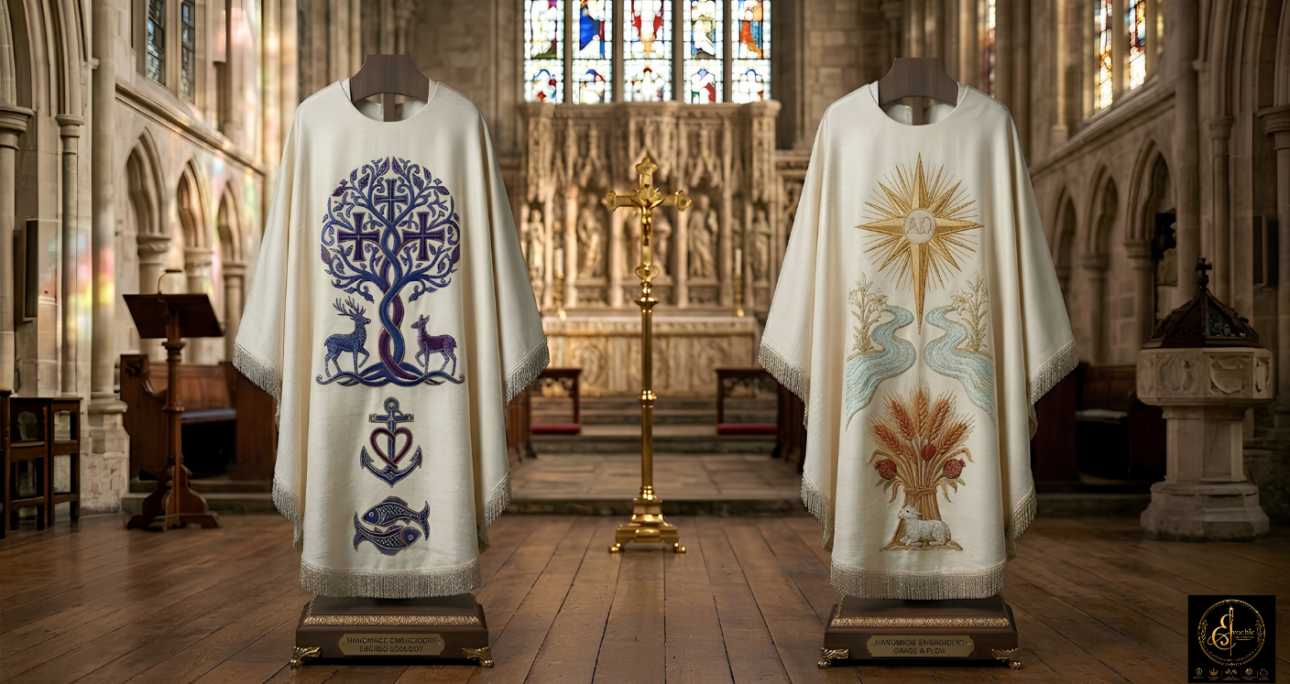
The cross remains the most important symbol in Christian embroidery. It represents faith, redemption, and the sacrifice of Christ.
Crown Designs
Crowns symbolize the kingship of Christ and are often used during important feast celebrations.
Alpha and Omega
These Greek letters represent Christ as the beginning and the end, making them a meaningful addition to liturgical garments.
Wheat and Grapes
These symbols are closely connected to the Eucharist and remind worshippers of Holy Communion.
Floral Patterns
Lilies, roses, and vine designs are frequently embroidered to symbolize purity, devotion, and spiritual growth.
The Craftsmanship Behind Handmade Vestments
Creating embroidered church garments requires careful planning and attention to detail. The process begins with selecting suitable fabrics that complement the embroidery design.
Popular fabric choices include:
- Brocade
- Damask
- Silk
- Velvet
- Premium polyester blends
After the design is prepared, artisans carefully transfer patterns onto the fabric and begin stitching. Depending on the complexity of the design, production can take several days or even weeks.
The final result is a vestment that combines beauty, durability, and spiritual meaning.
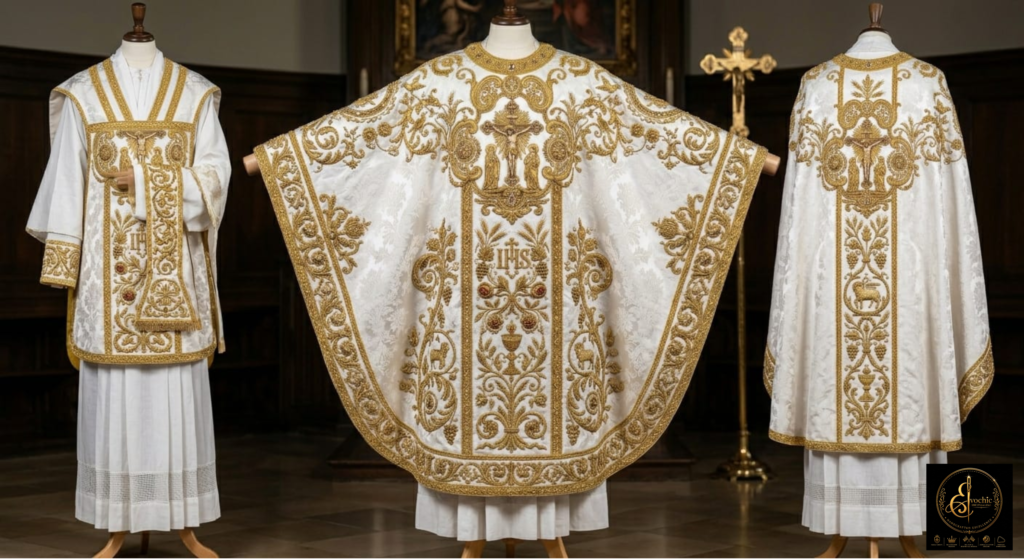
Traditional Embroidery Techniques
Several embroidery methods are commonly used in church vestment production.
Goldwork Embroidery
Goldwork uses metallic threads to create luxurious designs often reserved for special liturgical celebrations.
Bullion Embroidery
This technique creates raised decorative elements that add depth and elegance to religious garments.
Silk Thread Embroidery
Silk embroidery offers smooth finishes and vibrant color combinations that enhance visual appeal.
Appliqué Embroidery
Fabric pieces are carefully attached and embellished with stitching to create intricate religious imagery.
These traditional techniques contribute to the timeless beauty of handcrafted vestments.
Custom Embroidery for Churches
Many congregations choose custom-made embroidered garments to reflect their unique identity and traditions.
Customization options may include:
- Church emblems
- Parish logos
- Religious monograms
- Liturgical symbols
- Personalized color combinations
- Special feast-day designs
Custom embroidery ensures that each garment serves both practical and spiritual purposes while reflecting the values of the church community.
Importance of Quality in Liturgical Garments
Church vestments are often worn during significant religious services throughout the year. High-quality craftsmanship ensures that these garments maintain their appearance despite regular use.
Handcrafted embroidery provides:
- Strong stitching
- Long-lasting decorative elements
- Enhanced visual appeal
- Greater resistance to wear
- Lasting value for churches
Investing in quality vestments allows churches to preserve their liturgical traditions for many years.
Preserving Sacred Art Through Handmade Embroidery
The art of hand embroidery continues to play an important role in preserving religious craftsmanship. Skilled artisans dedicate years to mastering traditional techniques that have been passed down through generations.
Their work helps maintain a valuable cultural and spiritual heritage while creating garments that inspire reverence during worship services.
By choosing handcrafted embroidered vestments, churches support traditional craftsmanship and ensure that these historic techniques continue to thrive.
Conclusion
Handcrafted embroidered church vestments represent a beautiful blend of faith, tradition, and artistic excellence. From intricate goldwork to carefully stitched religious symbols, every detail reflects devotion and respect for sacred worship.
A handmade embroidery chasuble is more than a liturgical garment—it is a lasting symbol of craftsmanship, spiritual significance, and timeless church tradition. Through skilled artistry and attention to detail, these vestments continue to enrich worship experiences and preserve the beauty of Christian heritage.
FAQs
Why do churches choose handmade embroidered vestments?
Churches value handmade embroidery for its superior craftsmanship, unique appearance, durability, and traditional character.
What is the difference between hand embroidery and machine embroidery?
Hand embroidery is stitched manually by skilled artisans, while machine embroidery is produced using automated equipment. Hand embroidery typically offers greater detail and individuality.
Can handcrafted church vestments be customized?
Yes. Churches can request specific symbols, colors, emblems, and design elements to suit their traditions and liturgical needs.
What embroidery techniques are commonly used for church garments?
Popular techniques include goldwork, bullion embroidery, silk thread embroidery, and appliqué embroidery.
Are handmade embroidered vestments durable?
Yes. When crafted using quality materials and proper techniques, handmade vestments can remain beautiful and functional for many years.
Which liturgical garments commonly feature hand embroidery?
Chasubles, stoles, copes, altar cloths, church banners, and other ceremonial vestments often include handcrafted embroidery.